What APR Really Means: Reading the Cost of a Loan

Source check: 27 July 2026. This article explains disclosure concepts; it does not calculate the APR for a specific contract.
The Consumer Financial Protection Bureau explains that an interest rate is the cost of borrowing principal, while APR is a broader annualized measure that can include the interest rate and certain additional charges. See the CFPB’s APR and interest-rate explanation.
APR is valuable because a low advertised rate can sit beside required charges. It is not a complete description of affordability or cash flow.
What APR can tell you
For comparable credit products, the disclosed APR can help reveal that:
- two loans with the same stated interest rate have different required charges;
- a short-term fee represents a high annualized cost;
- a “no-interest” product may still carry charges included in the disclosure.
The exact federal calculation and charge treatment come from Regulation Z and its official interpretations, available through the CFPB’s current regulation page.
What APR does not tell you by itself
APR alone does not answer:
- the total dollars paid over the actual term;
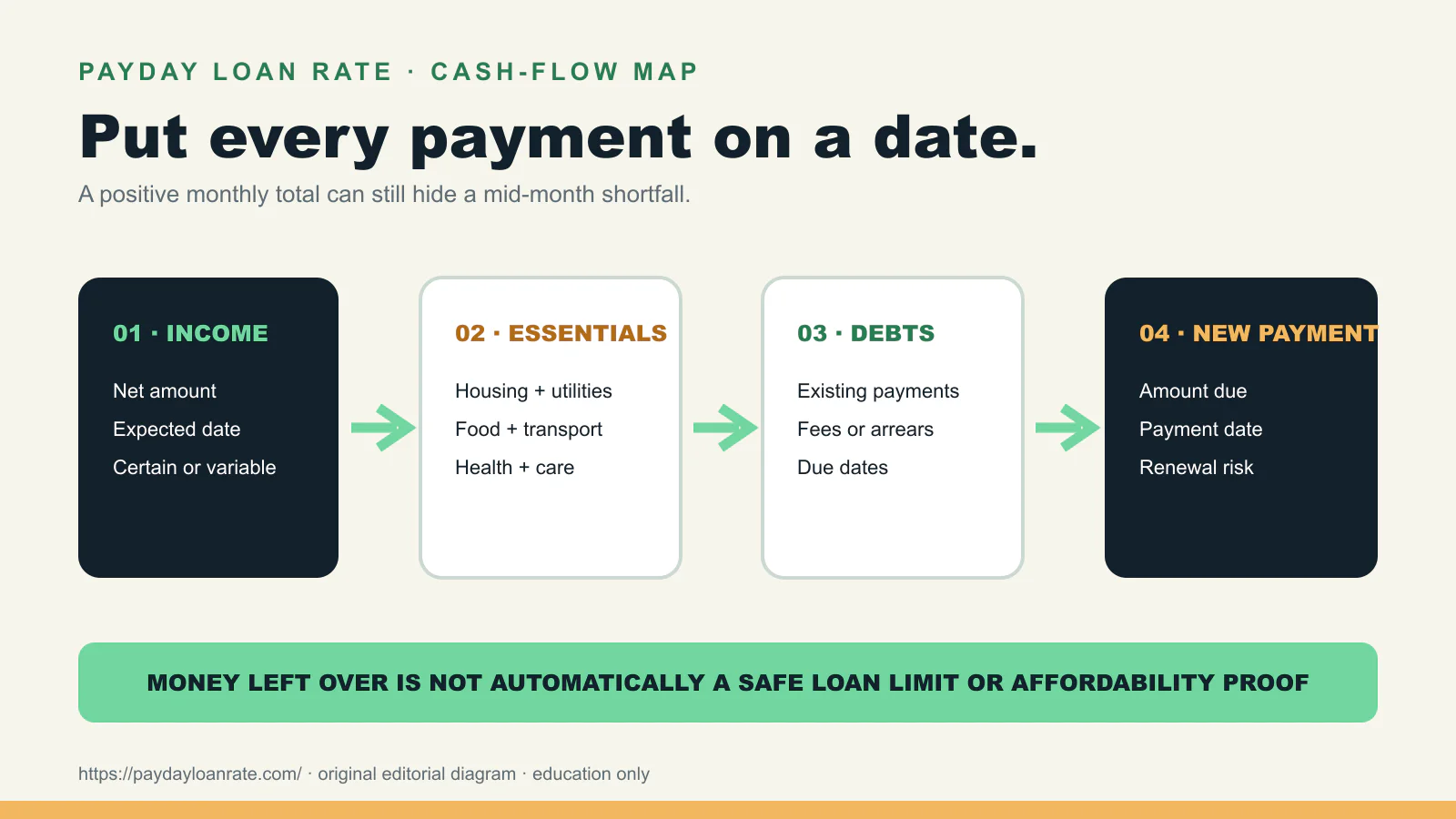
- whether payments fit the borrower’s income dates;
- whether a variable rate can change;
- whether a late, optional, or contingent fee applies;
- whether collateral or automatic withdrawal is required;
- whether refinancing or early payoff changes the outcome.
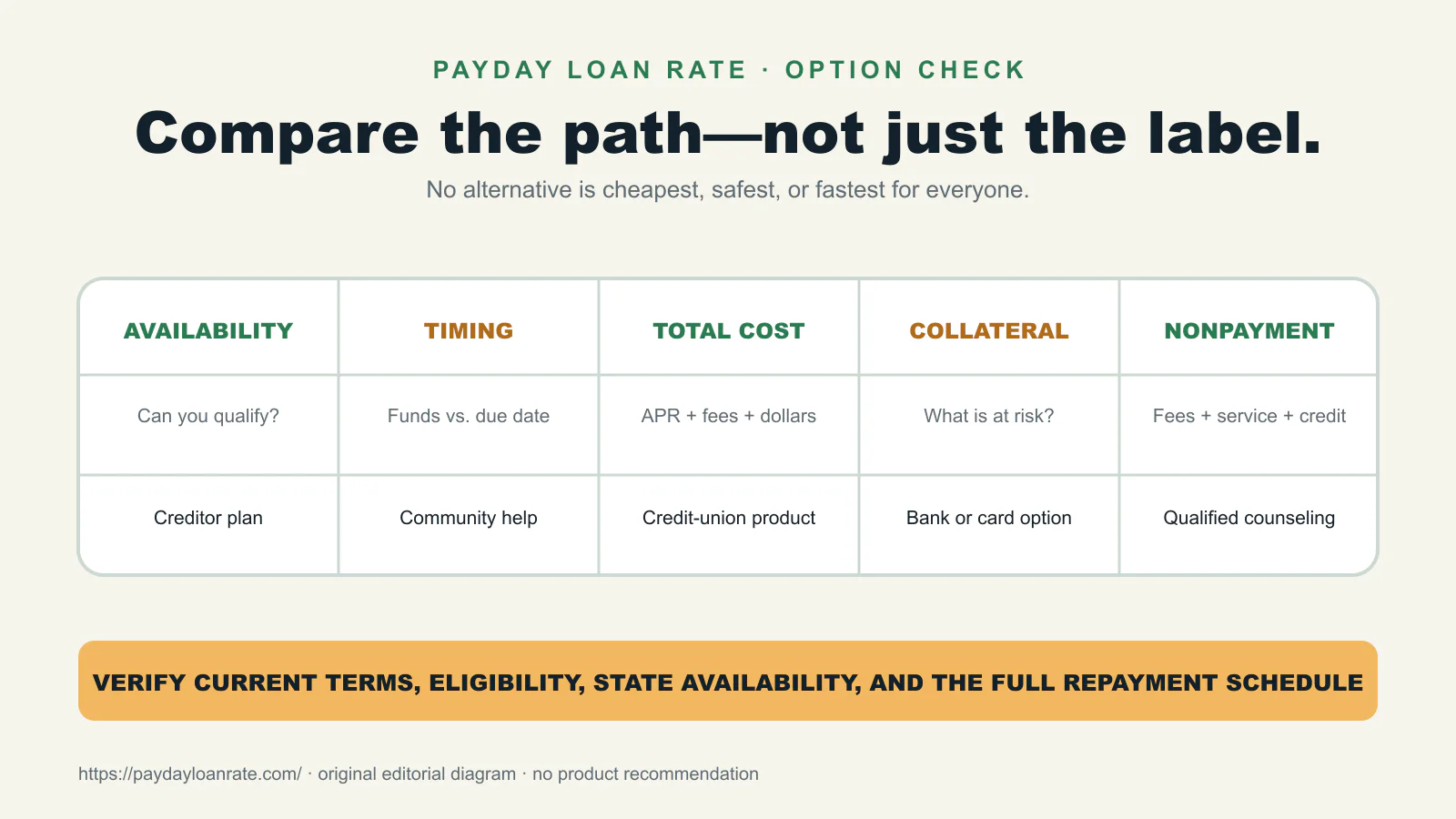
Compare the disclosure and payment schedule, not only the percentage.
A sourced short-term example
The CFPB gives an educational payday-loan example of a $15 fee per $100 borrowed for two weeks, which produces an APR of almost 400%. The annualized percentage is high because the charge applies over a very short term. See the CFPB’s payday-loan cost guide.
This is a CFPB example, not a quote or prediction for another loan.
Why incomplete examples should not be calculated
An APR cannot be responsibly reconstructed from a fee and principal alone. The calculation may also require:
- the loan term;
- payment dates and amounts;
- when funds are advanced;
- which charges are finance charges;
- whether the quoted amount is gross proceeds or cash received.
If an advertisement says “$5 fee” but omits those facts, there is not enough information to assign a reliable APR. Ask for the formal disclosure.
A comparison worksheet
| Disclosure item | Loan A | Loan B |
|---|---|---|
| Amount financed | Copy from disclosure | Copy from disclosure |
| Cash received | Copy from contract | Copy from contract |
| Finance charge | Copy from disclosure | Copy from disclosure |
| Disclosed APR | Copy from disclosure | Copy from disclosure |
| Number and timing of payments | Copy from schedule | Copy from schedule |
| Total of payments | Copy from disclosure | Copy from disclosure |
| Variable, renewal, or collateral terms | Read contract | Read contract |
Do not fill a missing disclosure with an online approximation when a binding decision depends on it.
Key takeaway
APR is a standardized annualized comparison tool, not a promise about total cost or affordability. Read it with the finance charge, cash received, payment schedule, and contract.
General consumer education only, not financial or legal advice and not a loan offer.
aprinterest-rateborrowing-basicsloan-costconsumer-education